Risk Assessment
Structured assessments that show you where your real security risks are, ranked by business impact, so you can make informed decisions about what to fix first.
Schedule a Free ConsultationSecurity decisions made without a risk assessment are guesses. You might fix the wrong things, spend budget on controls that don't reduce your actual exposure, or miss risks that seem low-profile until they aren't. A proper risk assessment gives you a ranked, evidence-based picture of where the real problems are.
It's also a formal requirement. ISO 27001 requires a documented risk assessment before certification. SOC 2 auditors look for evidence of systematic risk identification. PCI DSS requires risk assessments annually and after significant changes. Most organizations need this work done regardless. A risk assessment provides it in a form that satisfies both operational and compliance needs simultaneously.
Methodologies we use
We select and adapt methodologies based on your compliance requirements, industry, and risk maturity.
ISO/IEC 27005
The international standard for information security risk management, designed to support ISO 27001. Defines a structured process for risk identification, analysis, evaluation, and treatment in the format auditors expect.
NIST Risk Management Framework (SP 800-37)
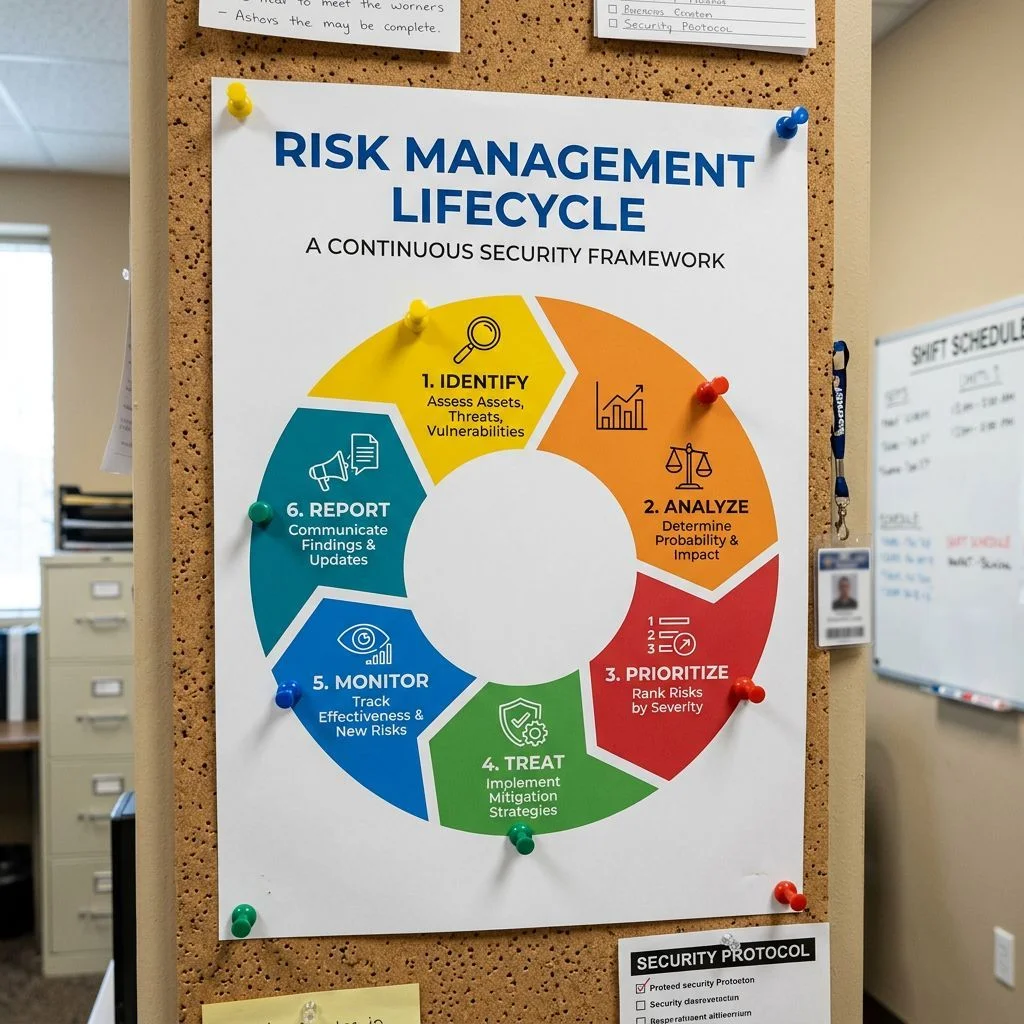
A six-step lifecycle framework: categorize, select, implement, assess, authorize, and monitor. Widely used in government and regulated industries for managing systems with different risk profiles.

FAIR (Factor Analysis of Information Risk)
A quantitative model that translates cyber risk into financial terms: probability and expected loss magnitude. Useful when leadership wants dollar-denominated risk to make investment decisions.
How the assessment works
Asset inventory and classification
Identify and classify assets your business depends on: data, systems, processes, and people. Risk lives in assets; you can't assess risk without knowing what you're protecting.
Threat identification
Map threat actors and events relevant to your industry. For the Maldives: ransomware targeting hospitality, payment fraud, nation-state interest in government systems, and insider threats.
Vulnerability analysis
Identify control weaknesses through penetration test findings, configuration reviews, policy gaps, and architectural weaknesses. Vulnerabilities without relevant threats are low priority.
Likelihood and impact analysis
Assess exploitation likelihood given existing controls and business impact if realized: financial, operational, reputational, and regulatory. Produces a risk score for prioritization.
Risk treatment decisions
For each risk above threshold: mitigate, transfer, accept, or avoid. We document the rationale for each treatment decision and build the implementation plan.
Residual risk and review
Calculate residual risk after controls. Risks above threshold are escalated for management acceptance. The register is reviewed annually and after significant changes.
What you receive
Engagement deliverables
Risk register
Core deliverableComplete asset-based risk register with threat scenarios, vulnerability analysis, likelihood/impact scores, risk ratings, risk owners, and treatment decisions.
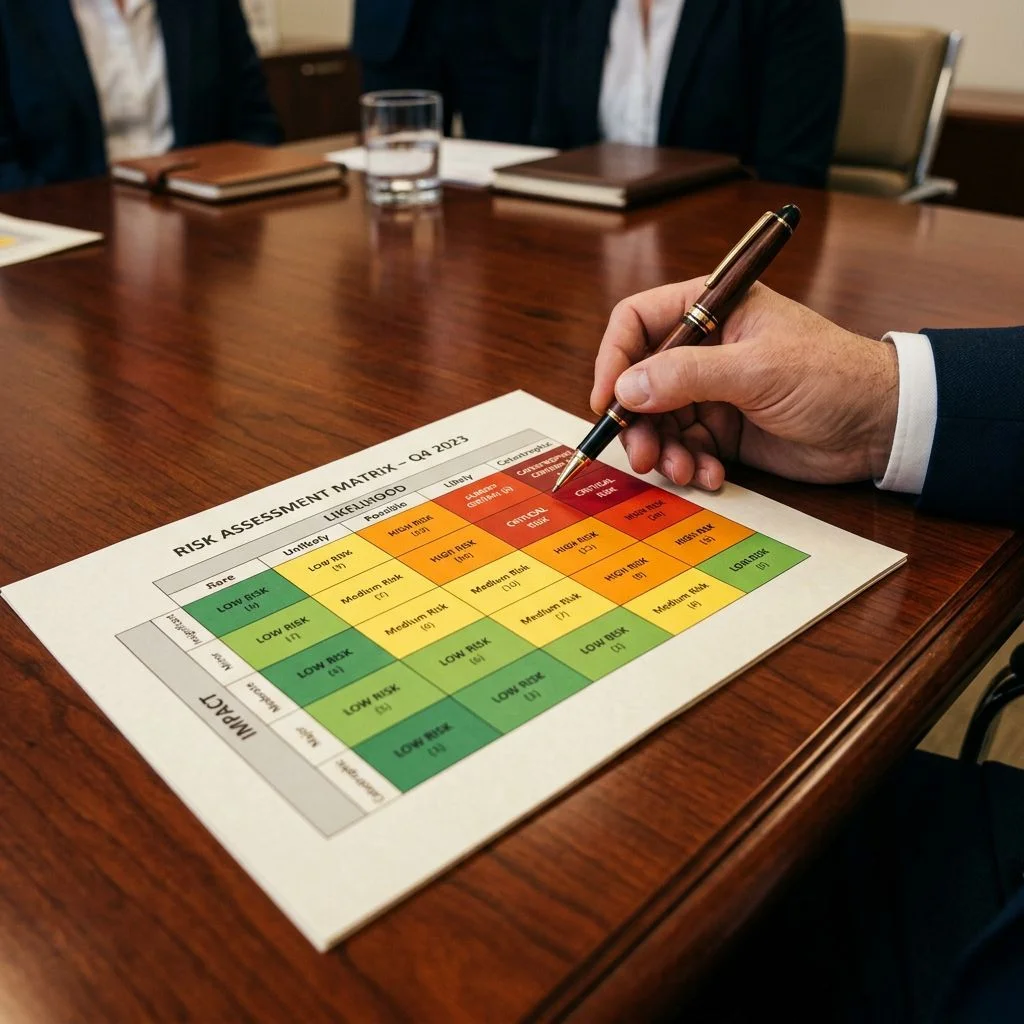
Risk heat map
For leadershipVisual risk landscape showing distribution of risks by severity. Useful for board reporting and communicating overall risk posture to leadership.
Treatment plan
Phased planPrioritized roadmap for risk treatment, with specific control recommendations, effort estimates, and implementation timeline.
Asset inventory
PrerequisiteStructured inventory of information assets with classification, ownership, and criticality ratings. A prerequisite for both risk management and ISO 27001 compliance.
Management summary
For executivesExecutive-ready summary translating risk findings into business terms: top risks, potential costs, and what it would take to address them.
Compliance mapping
Multi-frameworkRisk register formatted for ISO 27001, SOC 2, and PCI DSS compliance requirements. Produced in auditor-ready format from the start.
Who this is for

- → Organizations pursuing ISO 27001 certification who need a formal risk assessment as a prerequisite
- → Businesses making significant technology changes (cloud migration, new systems, mergers) that change their risk profile
- → Leadership teams that want a defensible answer to the question "what are our top security risks?"
- → Organizations preparing for PCI DSS or SOC 2 audits that require evidence of systematic risk identification
- → Boards that want to understand and formally accept security risks, rather than have them sit undocumented
Know your actual risks before making security decisions
Start with a free consultation. We'll discuss your environment, compliance requirements, and what a risk assessment would involve for your organization.
Schedule Free Consultation